• Miscellany


    • Playboy’s original letterhead is a modernist classic, a bracing reminder of how important refined aesthetics were to Hefner’s enterprise and his notion of the good life. Via Letters of Note, here… a fascinating site that gathers up letters, postcards, telegrams, faxes, and memos of significance and interest. Hat tip @ettagirl, who’s feed on art & culture is well worth following.


    • Via Invisible Oranges, a classically-trained singer and voice teacher critiques five classic metal singers.

      Regarding Iron Maiden’s Bruce Dickinson: …Nothing but admiration for this singer…His diction is easily intelligible, regardless of range… an intensely rhythmic delivery… without losing legato and musical momentum, something a lot of classical singers struggle with, especially when interpreting the many staccato and accent markings that crowd scores by Bellini, Donizetti, etc.

      Ronnie James Dio? …another very fine singer… so naturally resonant. He performs with perfect legato, clear diction, and a consistent, organic vibrancy. He arranges his resonance space to create a shallow snarl without setting up any resistance for his breath. You can tell how healthy his delivery is from the way he moves in and out of brief moments of harmony with the other tracks with impeccable intonation. The whole piece is a must read… here.


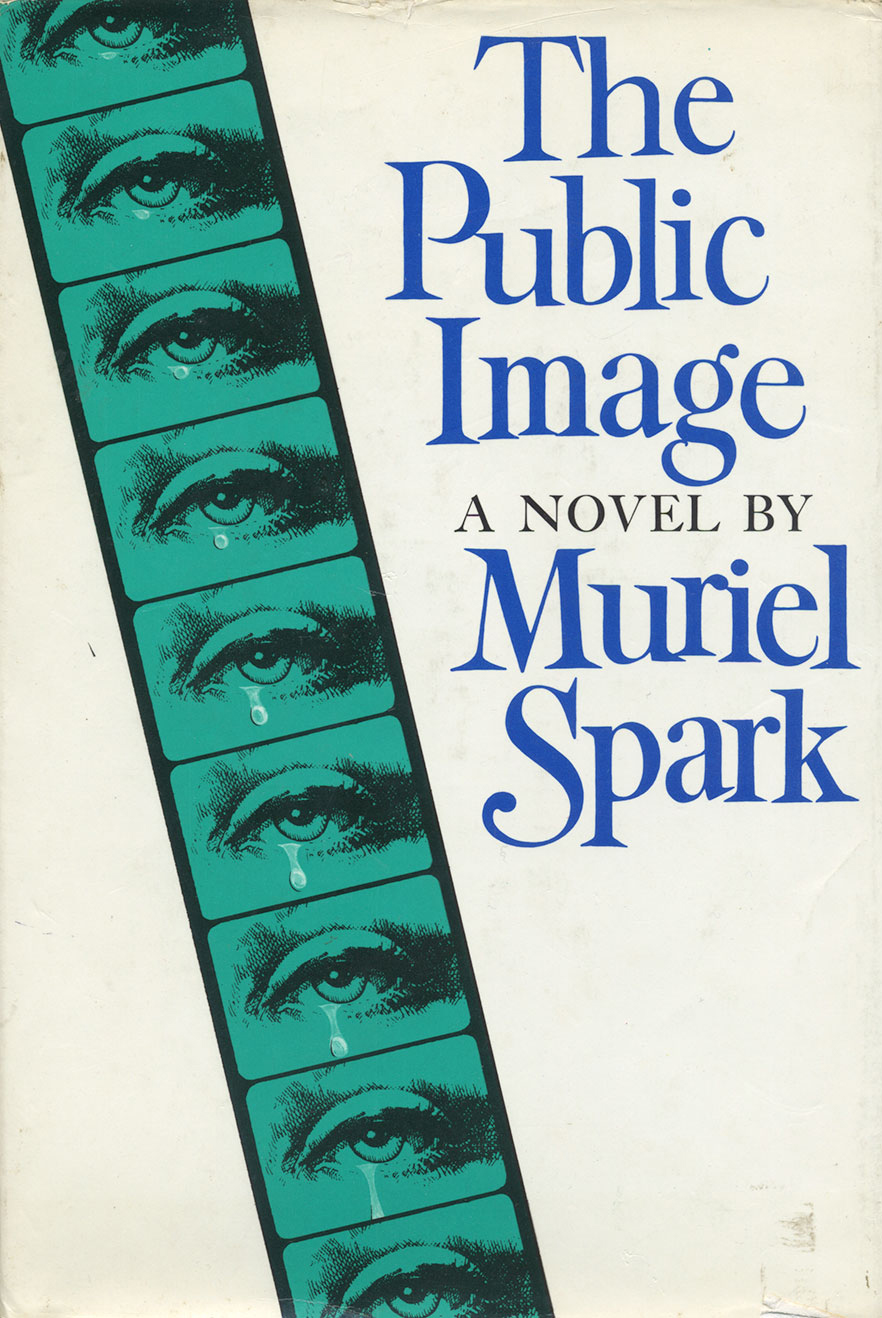
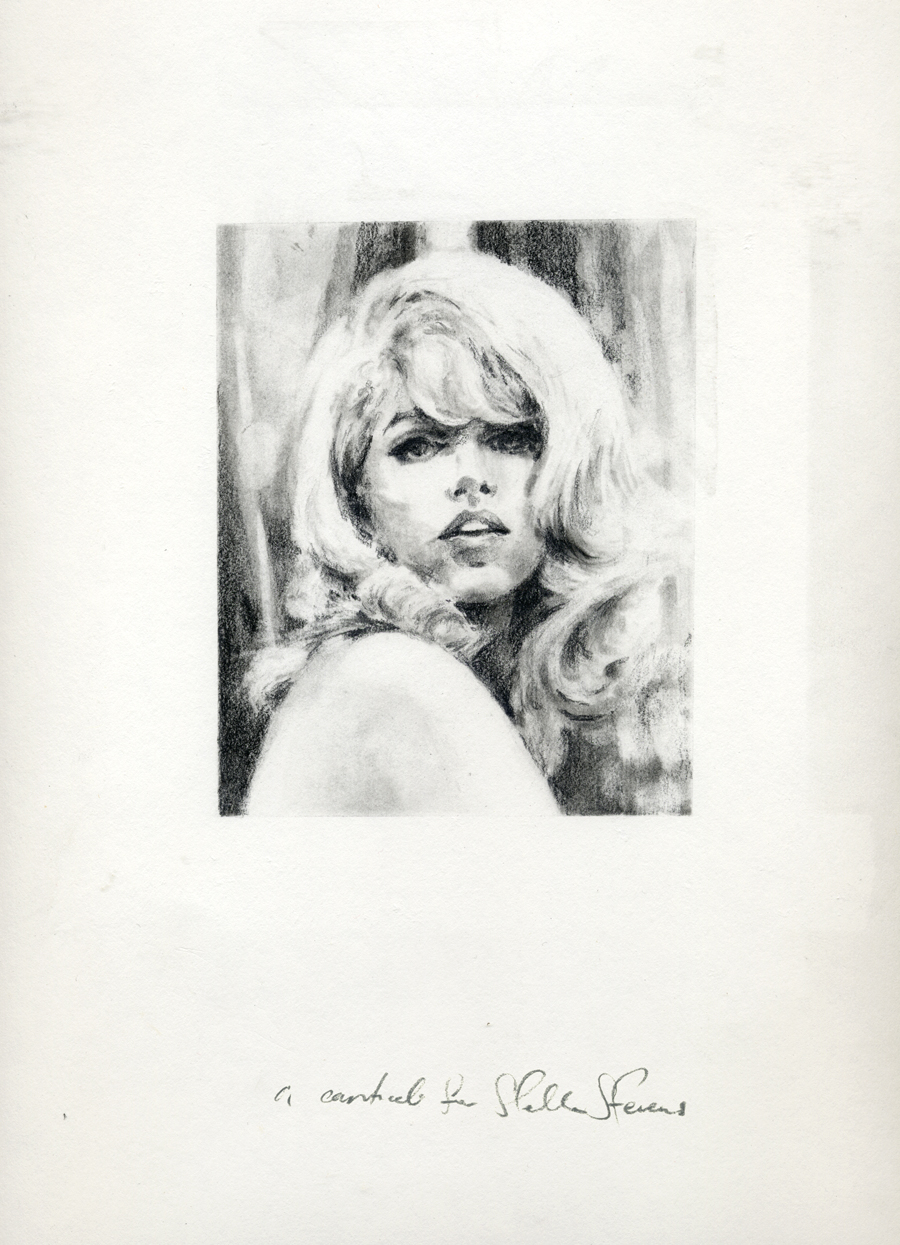
    • Besides the classic, sharp, unfussy design of the cover, the photograph bears an uncanny resemblance to Robert McGinniscelebrated rendering of Audrey Hepburn for the poster of Breakfast at Tiffany’s, below.


    • I really dig the new New York State license plate. I spent the last week driving abound the better part of western NY and these tastefully classic looking beauts kept popping up. I love, in particular, the re-embrace of the state’s official colors. Uncluttered, universal, distinctive yet free of kitsch they’re everything good government design should be. Not perfect (the arc on Empire State is a bit janky) but still, aces.

      (Unfortunately, they need all the support they can get. Quite a kerfuffle has broken out in thier wake. Originally, adoption of the new design was mandatory, accompanied by a fee - folks went bananas. Once the design was introduced, they went double bananas, castigating the design as plain and ugly. Cue kerfuffle. Sigh.)


    • Black Sheep Antiques, Duanesburg, NY


    • Spotted this uncharacteristically swinging cover art for Anthony Powell’s The Military Philosophers - the ninth in the A Dance to the Music of Time series, a twelve novel cavalcade of mid-20th century English life, manners, culture, etc…


    • Short of the actual detection of extraterrestrial life few things would make me happier than the following news. 2010 is the year of “re-contact” with the mighty Man or Astroman! According to a transmission from MOAM-HQ, after 10 years of cryogenic storage they have have knocked the frost particles off and are properly thawed for live music experimentation. Read the rest of the transmission, here. And remember, fear not - they come as friends.


    • “Check out the eye popping, fantastic type and strikingly modern composition of this old Bob Seger record” is not something I could have imagined proclaiming in a million years, but seriously - check out the eye popping, fantastic type and strikingly modern composition of this old Bob Seger record (larger version, here). And, while you’re at it, take a few minutes to soak in this record’s centerpiece - the epic, wistful, road-weary melancholy of “Turn the Page.”


    • Absolutely astonishing ultra-high resolution photographs of birds by Andrew Zuckerman. A decent overview can be found here, while Zuckerman’s site, here, showcases even more. Also check out his earlier project, Creature, featuring a wider spectrum of wildlife. The detail is breathtaking, and the depth of personality projecting from the animals is downright eerie.


    • For your pleasure, an oddly charming, earnest, hippy-dippy photo recreation of Manet’s The Luncheon on the Grass from an old 1970 photography annual.


    • Gorgeous, elegant cover for Richard Avedon’s 1959 portrait book Observations. Rather than taking it in whole, it rewards a close scan so you can follow the way the letters slice, carve and cordon off patches of creamy white. Easy to appreciate, so hard to pull off.


    • A moment’s rest at the Rochester Institute of Technology, between two immense murals by Joseph Albers meant to evoke the equally brilliant Kodak logo. Aces.


    • Things the Ramones did want to do, things the Ramones did not want to do, things the Ramones did do, things the Ramones told you to do, things the Ramones warned you about doing, things the Ramones did not like, things the Ramones wondered about, and things the Ramones would do next time… over at Electra Luxx’s place, here.


    • Goodbye, and a hearty salute to Grafik Magazine, which folded a few days ago. This cover gallery, here, is a fitting testament to its accomplishment - a cavalcade of top notch design, and an ad-hoc primer to just about every style & mode in vogue since 2003.


    • The first trickle
      of water down
      a dry ditch stretches
      like the paw
      of a cat, slightly
      tucked at the front,
      unambiguous
      about auguring
      wet. It may sink
      later but it hasn’t
      yet.
      – Kay Ryan, The Paw of a Cat

  • Further miscellany, odds & sods, etc., at the Tumblr annex, here.
Categories: Design, Movies

Absolutely stunning Japanese movie poster for Pasolini’s bewildering art house head scratcher, Teorema.

Categories: Culture, Movies

Thou shalt not show the law defeated, or the inside of a thigh, or lace lingerie, or a dead man, or narcotics, or drinking, or an exposed bosom, gambling, a pointing gun, or a tommy gun. This 1940′s photo stacks all ten cardinal sins forbidden at the time by movie studio self-censorship regulations into a ziggurat of sin. Aces.

Categories: Fashion, Movies

Stills from the 1967 mod-noir detective flick Tony Rome, starring Frank Sinatra. As a caper the movie is solid if a bit by the numbers. As eye candy, though, it’s a glazed treat. Sinatra struts though the movie dressed basically like the old I.R.S. records logo -  the contrast of his black suit and fedora with the sun addled Miami backdrops is one of the movie’s chief visual pleasures. Adding to the decor are a scrumptious Jill St. John and the fabled Fontainebleau Hotel and Casino (which was also memorably featured in Goldfinger.) The title song is a decent fuzzy lounge swinger by Nancy Sinatra and Lee Hazlewood. It was followed by the solid, if slightly shabbier sequel, Lady in Cement, with Raquel Welch providing the ornamentation and Hugo “Moogy-Moog” Montenegro providing the stellar soundtrack.

Categories: Art, Culture, Movies

A lot will be written, understandably, about Dennis Hopper’s indelible wild-eyed performances as an actor and his stature as a cultural iconoclast. More will be written, deservedly, about his gifts as a director (his 1980′s neo-noir the Hot Spot, with Jennifer Connelly and Don Johnson is a personal favorite…) Too little, unfortunately, will be written about him as an artist – as a photographer, painter, and patron.

Hopper, for all of his hippie-savage persona (and dissolute habits), was a man of considerable aesthetic gifts and a genuine passion for art (instilled in him, in that only-in-Hollywood-sorta-way, by non other than Vincent Price)

He found his home amidst the Pop Art scene, beginning in the early 60′s. He became a friend, collector and patron to Jasper Johns, James Rosenquist , Robert Rauschenberg , and especially, Ed Ruscha. In turn, they inspired Hopper in his own photography and painting – and over the years he built up a respectable oeuvre of solid, earnest work in the genre.

His paintings are the work, in the best sense, of a gifted amateur – accomplished, passionate, but with visible effort and little transcendence. His photographs, on the other hand, are far more distinguished – characterized by striking graphic compositions, technical adeptness, and a young Jane Fonda. That is, Hopper had an eye & chops, yes, but he was also, um… Dennis Hopper. As a result the photography is goosed by the presence of his fellow famous young and restless – It’s like Ruscha or William Eggleston doing Hollywood candids.

Here’s the thing though – To view Hopper as derivative is to miss what makes him matter as an artist. Genres and styles are defined by a handful of brilliant outliers, driven by a primordial vision that guides their craft. They do the heavy work of clearing spaces in the cultural landscape. The vast majority of us who want a passionate relationship with art inhabit these spaces, either as viewers, artists, critics, or patrons. Hopper’s work, for me, is a testament to that dynamic – not to defining art, as much as living within it.

Categories: Design, Movies

My goodness, I don’t remember these being so damn good looking…..

Categories: Miscellany, Movies

? …well, now you know, in case it comes up this weekend. Till Mon, then…

Categories: Design, Movies

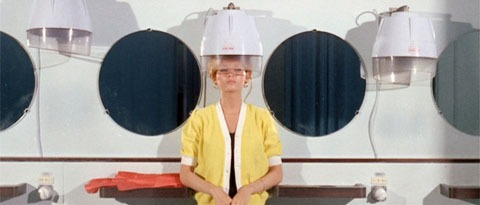
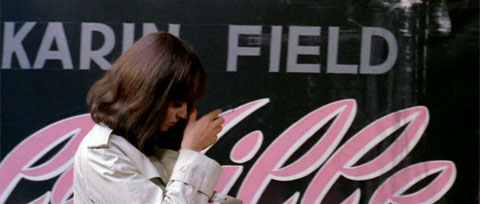
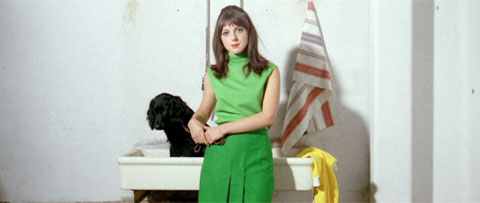
Stills from the fantastic opening credits from the flick Women in Trouble, directed by Sebastien Guterrez, just out on DVD. Very reminiscent of the work of Los Angeles based collagist Alexis Smith. Smith is among my absolute favorite artists – inexplicably examples of her work are really scarce online. (That will be addressed, soon, in a future post. For now, a smattering here.) Basically she’s the Hannah Hoch of Hollywood, using the deadpan Dada grammar of collage to reconfigure and re frame shards of entertainment culture in poignant and profound ways…. which is what I love about the Women in Trouble credits. Gorgeous!

Anyway, the movie follows the intertwining bottle rocket trails of 8 or so LA women in the course of a single madcap day. One reviewer compared it to George Cuckor’s the Women if it were directed by Pedro Almodóvar. Right on, broadly speaking. The debt to Almodóvar is deep, explicit and acknowledged – strong sexy female leads, bracing vulgarity, and genuine pathos, all swirling in a melodramatic bisque. It’s really good – not one for the ages, but a fab, saucy entertainment with heart.

It’s charm, however, is burnished by unexpectedly satisfying details in and surrounding the flick… The design in support of the film is excellent – besides the credit sequence, the title type and the  sixties pop inspired poster are particularly good. Oh, and the the soundtrack is by pop-psych legend Robin Hitchcock.

The biggest surprise, however, is this whole Carla Gugino/Elektra Luxx thing. Let me explain. Gugino has had a solid string of TV and movie roles, playing an agent on Entourage, and the lead role in the detective drama Karen Sisco. She’s also known for the small but geek-fave role as the original Sally Jupiter in the Watchmen adaptation… In Women in Trouble Gugino plays blue movie star Elektra Luxx.

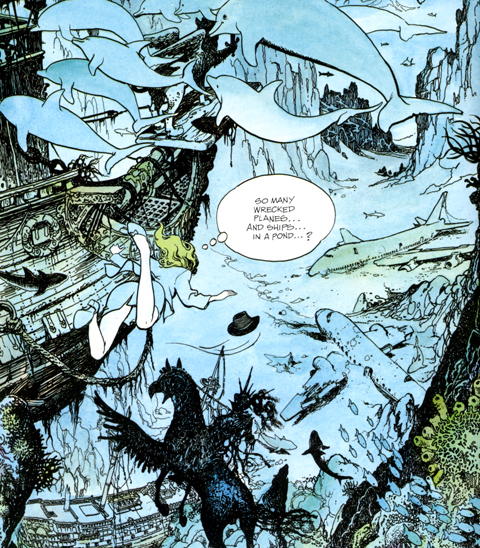
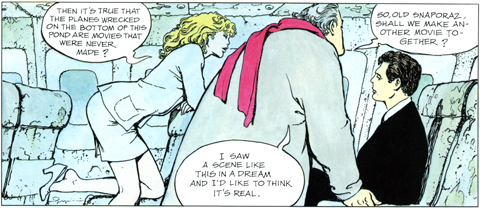
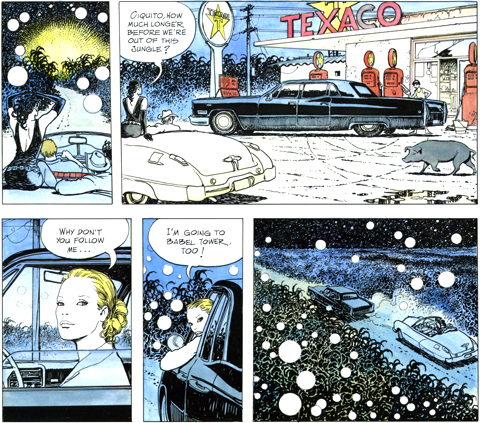
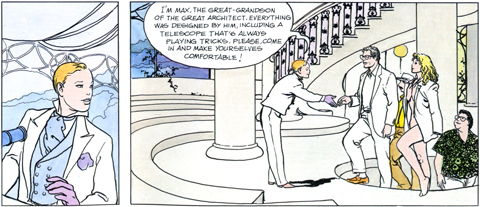
So, ostensibly to promote Women in Trouble, she launches a blog behind the persona of Luxx. So far, standard viral promo fare, right? Well, during the past year she’s saluted cats as disparate as Modesty Blaise actress Monica Viiti, Bedazzled director Stanley Donnen, Giant Sand’s Howe Gelb, and synth maestro Geogrio Moroder. She penned a mash note to beloved Rochester garage legends the Chesterfield Kings, and is breathlessly awaiting the release of the new New Pornographers album. She clued readers into the obscure lo-fi psych of the Capstan Shafts. She posted the single best pictures of Linda Carter as Wonder Women ever. And she celebrates every weekend by posting glamour shots of, at first, Anita Ekberg, and now Sophia Loren. And, in an uncanny overlap with this here blog, posted not only about God Help the Girl, the distaff spin off of Belle & Sebastian, but a wrote an appreciation of the obscure Fellini/Manara comic Trip To Tullum.

All in all, a staggering level of hep-ness… As a result, my enthusiasm for her enthusiasms certainly gooses my enthusiasm for the movie. In any case, Women in Trouble is well worth seeing, the credits deserve a huzzah for thier artfulness, and Carla Gugino/Elektra Luxx’s blog is well, well, worth visiting regularly. Good show all around!

Categories: Culture, Movies

He & She is a lost classic, a fizzy cocktail of a sitcom, with an easy going, effervescent sophistication, and starred one of the most appealing couples in showbiz… I caught wind of it after doing some digging around about Paula Prentiss after seeing her in The World of Henry Orient (itself a real gem of a flick, a quirky mid 70′s Upper East Side lark about two precocious teenage girls that form a crush on a caddish conductor played by Peter Sellers.)

It ran on CBS in 1967. Prentiss co-starred with real life husband Richard Benjamin as a young, smart and more than a little goofy New York couple. Benjamin portrayed Dick Hollister - cartoonist and creator of a popular comic strip and TV character called Jetman. Prentiss played his wife Paula, a social worker. In the annals of great screen couples they deserve to be mentioned in the same breath as The Thin Man’s Nick and Nora Charles. They’re that good – hilarious, effortlessly stylish with an infectious, natural rapport.

Equally distinguished was Jack Cassidy,  Shirley Jones’ husband, and, of course David and Shaun Cassidy’s dad. He played Oscar North, the obliviously egotistical actor who played Jetman on TV. His every appearance is a veritable one man symphony of flamboyant hamminess.

The show itself is a sheer delight. Great set ups, witty dialog, and a deft mix of comedy, ranging from literate banter, absurdist humor and sheer slapstick. It was cancelled after just one season but in it lay the DNA for everything from the Bob Newhart Show and Mary Tyler Moore all the way to Fraiser. The world is a brighter funnier place for its existence. Also, Prentiss and Benjamin are still together, which adds a really sweet overtone to watching the show.

Sadly, it’s never been in circulation on DVD. It floats around in scratchy, ghostly, glitchy versions lovingly compiled off of old broadcasts and VHS tapes by fans. One version can be gotten here, from the amazing folks at modcinema, but searching around is recommended.

Categories: Art, Movies

Macario Gomez, Spanish 39×27, 1963
Boris Grinsson, French 63×47. 1963
Averardo Ciriello, Italian 79×55, 1965
Robert McGinnis, British 30×20, 1971
Robert McGinnis, British unused art, 1971

Categories: Art, Books, Culture, Movies

I have long adored this pair of New Yorker covers, illustrated by Owen Smith, for their attention-getting va-va-voom-ishness. The thing with Smith’s pulp derived work, though, is that it always has this aspect of impressionistic exaggeration to it, this bulging massiveness. In the past it always reminded me of social realist illustrations of the 20′s and 30′s – boxers and laborers, etc… And that thing being not my thing, that thing was always a hang up for me with Smith.

Looking again at these covers recently, his iconic flame haired femme fatale recalled something very different – the iconic flame haired femme fatales in Dante Rossetti’s Pre-Raphaelite paintings. This got me thinking… The Pre-Raphaelites rejected the classical stiffness of academic painting. They wanted to re-infuse high art with passion, detail, drama – visceral aesthetic heat. The human embodiment of that desire was more often than not a full lipped, square jawed, voluptuous, red haired fox.

That’s more like it. The echo of Pre-Raphaelite foxiness makes me like the covers even more, sure, but it also elevates them beyond “Look! Pulp! Sexy! Must not be the old starched collared, monocled New Yorker anymore!” They’re more of an articulated rallying cry – similar to the one their movie critic Pauline Kael made in the late 70′s when she titled her review collections Going Steady,  I Lost it at the Movies, and Kiss Kiss Bang Bang. They insist that our encounters with culture should be lusty and passionate as well as rigorous and cerebral. Well, yes. Agreed. (This notion also happens to be the overarching theme of Rush’s song suite Cygnus X-1 Book II: Hemispheres, but that is, of course, another post….)

Dante Gabriel Rossetti (1828-1882) Lady Lilith
Dante Gabriel Rossetti (1828-1882) The Bower Meadow

Categories: Design, Fashion, Movies

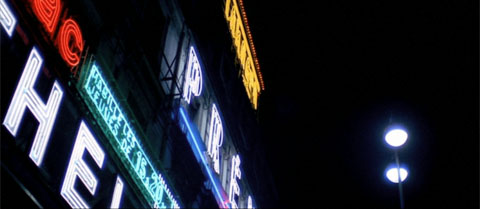
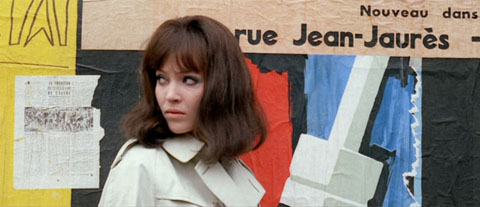
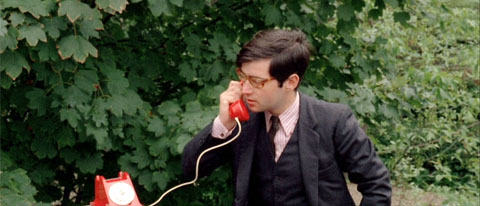
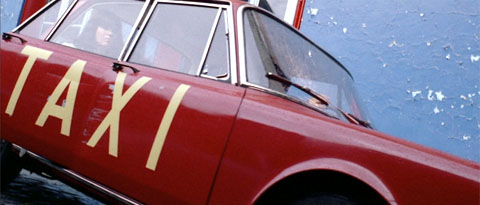
The stills above are taken from Jean-Luc Godard’s Made in USA. Made in 1966, it was an unauthorized adaptation of Donald Westlake’s the Jugger, featuring the adventures of Parker, a hard-boiled thief – the same character played by Lee Marvin in John Boorman’s 1967 classic Point Blank. (Parker was also recently adapted by Darwyn Cooke in an amazing graphic novel, the Hunter)

The movie is a squirrelly one. On the one hand, visually, it’s perfectly captivating. It is composed like a comic book, all bright colors shot rigidly against stark backgrounds.The stills speak for themselves – Scene after scene, the movie is farrago of pop art, mod fashion, and commercial signage. The dialog could be in Tasmanian and it wouldn’t matter a smidgen – it’s still a flat out sock knocker.

Which it might as well be, because the movie scarcely makes any sense at all. It’s confusing, deadpan, stiff, meandering, and plot-wise, essentially indecipherable. A decoder ring is provided on the Criterion Edition DVD in the form of a short interview with two Godard scholars. According to them, the flick is simultaneously a passionate love letter to, and a fierce rejection of, American films and culture, as well as a record of the disintegration of one of two concurrent love affairs. It is also, obviously, French. Enjoy it any way you see fit.

Categories: Movies

notorious_poster

Four main dollops of delight here. (1) the world can’t have enough stylish, romantic, witty, caper movies. The Notorious Landlady is as fine an entry in the genre as you could hope for – excellent “did she or didn’t she” suspense, fab London locales, winsome romance, frothy dialog, and the funniest and most artful runaway wheelchair sequence ever filmed. (2) Jack Lemmon is, as always, good nature personified, a zephyr of good cheer (3) Sure, Kim Novak is foxy, flirty, etc… here she also directed her own costuming/wardrobe to wonderful effect. She alternates between slightly wacky fashionista and a survey of late 50′s pinup styles – two modes which give the flick a tony flair with a consistently sexy icing. (4) Fred Astaire delivers one of the great hand talk performances of all time. I can only surmise that since he has no actual dance sequences he sublimated his moves into his hands – they are constantly in motion and once you notice them they are mesmerising, little miniature dances that embroider every scene he’s in. Top shelf entertainment, folks.

Categories: Movies

smilecomp

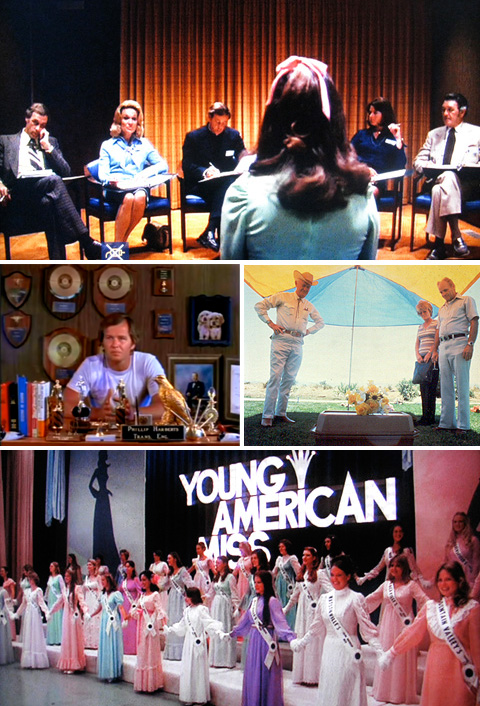
If setting one’s anthropological or satirical sights on Southern California is as difficult as shooting an arrow into a side of a barn then setting them on a beauty pageant in mid 70′s Southern California is as hard as walking into the side of the same barn.

Michael Ritchie’s Smile (1975) and Errol Morris’ Gates of Heaven (1978) serve as a useful reminders to never take an easy target for granted. Smile stars Bruce Dern and Barbra Feldon (Agent 99!!) in proto-mock-umentary about a small town beauty pageant in Santa Rosa, California. It is a direct, albeit far more subtle, progenitor of Christopher Guest’s mocumentaries. Gates of Heaven is a rigorously filmed documentary about the people whose lives cross at a pair of Southern Californian pet cemeteries. They are united by two fundamental convictions – the profound weirdness of Southern California, and the universality of human nature.

What’s amazing about the films is that they arrive at similar moments of profound insight and gob-smacking surreality from such very different starting points. As their personal philosophies, passions, and musings unspool, Morris’ subjects reach such high levels of quirk they drift beyond the edge of fiction. What makes them so moving is each oblique, strange, meandering interview becomes a loose prose poem to fundamental human themes – love, companionship, art, mortality, disappointment and aspiration. Richies’ film, a genuinely hilarious and gentle satire, is so lovingly staged, and the dialog so carefully wrought, that segments become little snowglobe dioramas the of human condition.

And what Tang frosted snowglobes! Both films have distilled over time into super saturated essences of the era. Belief in the promise of suburban Southern California seemed require the spiritual nourishment of ochre, flaming orange and lime. Filmed while the 70′s were in full swing, both directors stage and style scenes with Wes Anderson-esqe levels of compositional fussiness.

While they share a common nexus, each film leaves behind a distinctly different impression. Smile’s human moments dissipate quickly, and remains a big hearted time capsule. Gates of Heaven’s impact is far more profound and the weight of its numinous human strivings stay with you long after it’s scenes of 70′s kitsch fade.

Categories: Movies

dangerous2

dangerous1

Over here, we are big, big fans of Stephen Frears’  Dangerous Liaisons… The diabolical vicissitudes of seduction and betrayal, the costuming, the alabaster powdered decolletage, the Malkovich, all (with a Keanu shaped exception) awesome… Anyway, we recently watched Milos Forman’s competing interpretation, Valmont – meh… dramatically flatter, and while Colin “Darcy” Firth works for those with Firth shaped affections, not really feeling the Annette Benning/Meg Tilly/Fairuza Balk troika. However, this did lead to further research on the original book and other adaptations and…. goodness gracious jackpot!

The French recently staged a sumptuous new adaptation. The setting has been brilliantly transposed to the mid 1960′s. Mid century modern cars, furniture, costumes by Jean Paul Gaultier. A sultry and rapacious Catherine Deneuve and a smoldering, pouty, Adam Ant-y Rupert Everett preside over the lurid machinations, Nastassja Kinski (!!!), and a surprisingly sexy Leelee Sobieski are the innocents consumed and corrupted. Filmed as a TV mini-series, the longer running time allows for more dimension and nuance, which heightens and intensifies an already rich stew of hothouse melodrama. The new standard. Netfix link here.